Tag: reliability

  • Partnership with IEEE Smart Village at PowerAfrica 2026 in Nairobi

    PowerAfrica 2026 in Nairobi was an important milestone for Nearly Free Energy (NFE). We attended as an IEEE Smart Village Energy Entrepreneur, with a simple goal: learn from people who have already built and scaled energy ventures in Africa, deepen our technology partnerships, and understand what it will take to move our Reliable Power Microgrids beyond the pilot stage.
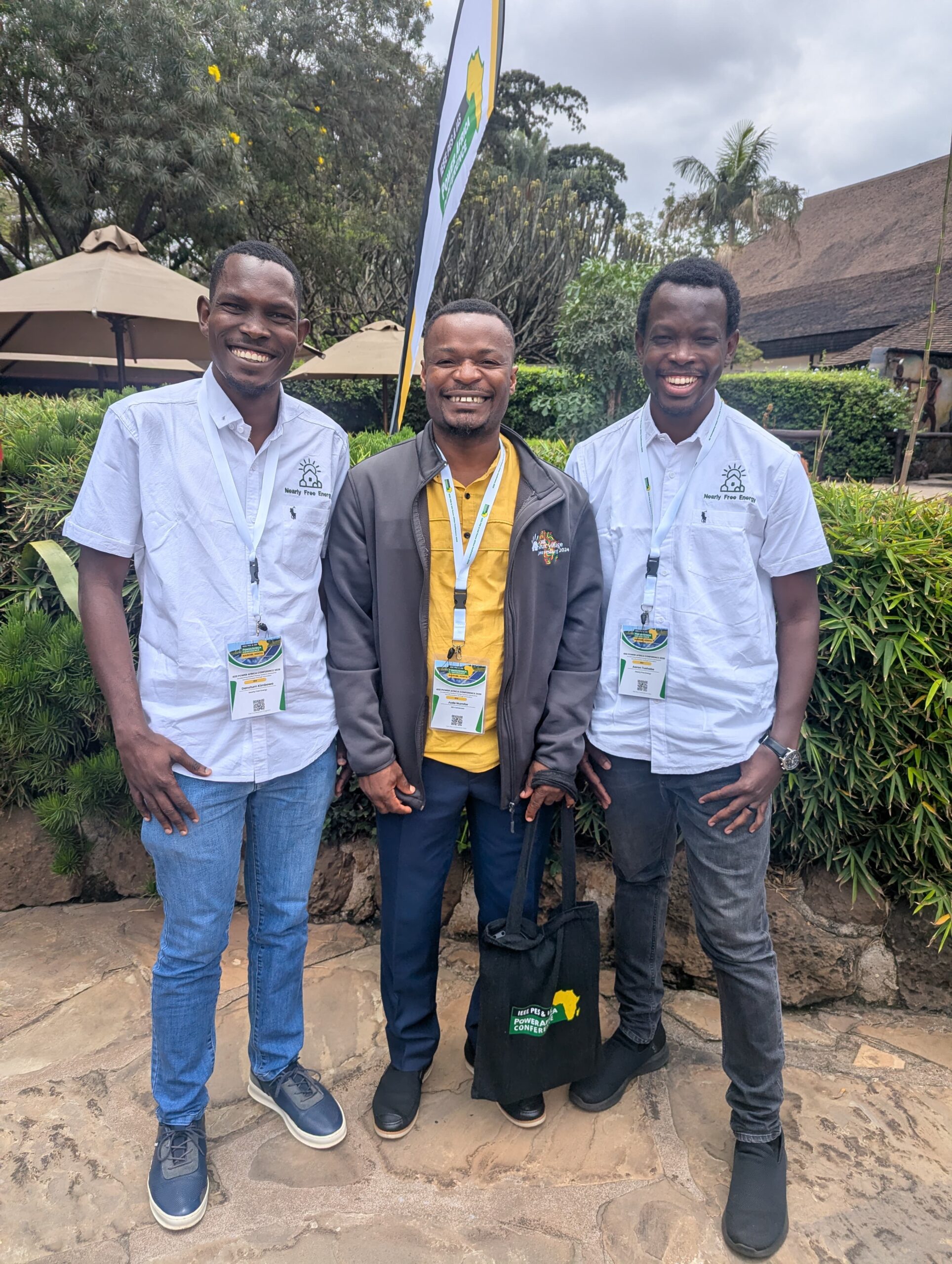
    Nearly Free Energy team members at IEEE Smart Village at PowerAfrica 2026 in Nairobi.
    NFE Co-founders (Dansturn and Aaron) with REI Cameroon’s Jude Numfor at IEEE Smart Village at PowerAfrica 2026 in Nairobi.

    Learning from entrepreneurs who have already scaled

    One of the most valuable parts of the week was connecting with experienced African energy entrepreneurs, including Jude from REI Cameroon and Ifeanyi from GVE Nigeria. Both were generous with their time and willing to share practical lessons from building energy businesses in their respective markets.

    Jude, in particular, challenged the way we were thinking about growth. His advice was simple but important: it can be far more cost-effective to build a strong pipeline of projects than to develop and deploy one project at a time. That conversation has already influenced NFE’s strategy for scaling beyond our first microgrid. We are acting on that lesson today by putting more emphasis on developing a portfolio of qualified communities and projects rather than waiting to complete one deployment before preparing the next.

    We are extremely grateful to Jude, Ifeanyi and IEEE Smart Village for creating an environment where this kind of practical peer learning could happen. For an early-stage energy venture, access to founders who have already travelled this road can be as valuable as access to capital.

    A clearer pathway for long-term partnership with IEEE Smart Village

    We also learned first-hand about IEEE Smart Village’s support and funding pathway for ventures aligned with its core pillars of Electrification, Education and Enterprise. What stood out to us was the rigor of the process. This is not simply a grant application; ventures are expected to demonstrate technical readiness, sustainable enterprise models, community impact, governance and a credible path to growth.

    That is exactly the kind of long-term partnership NFE needs at our current stage. We are not only looking for capital to buy equipment. We need partners who can help us strengthen the enterprise, challenge our assumptions, improve our technical approach and prepare the model for replication. Following PowerAfrica 2026, NFE is now preparing to pursue the IEEE Smart Village enterprise funding pathway.

    Metering 3.0 moved from an idea to something people could hold
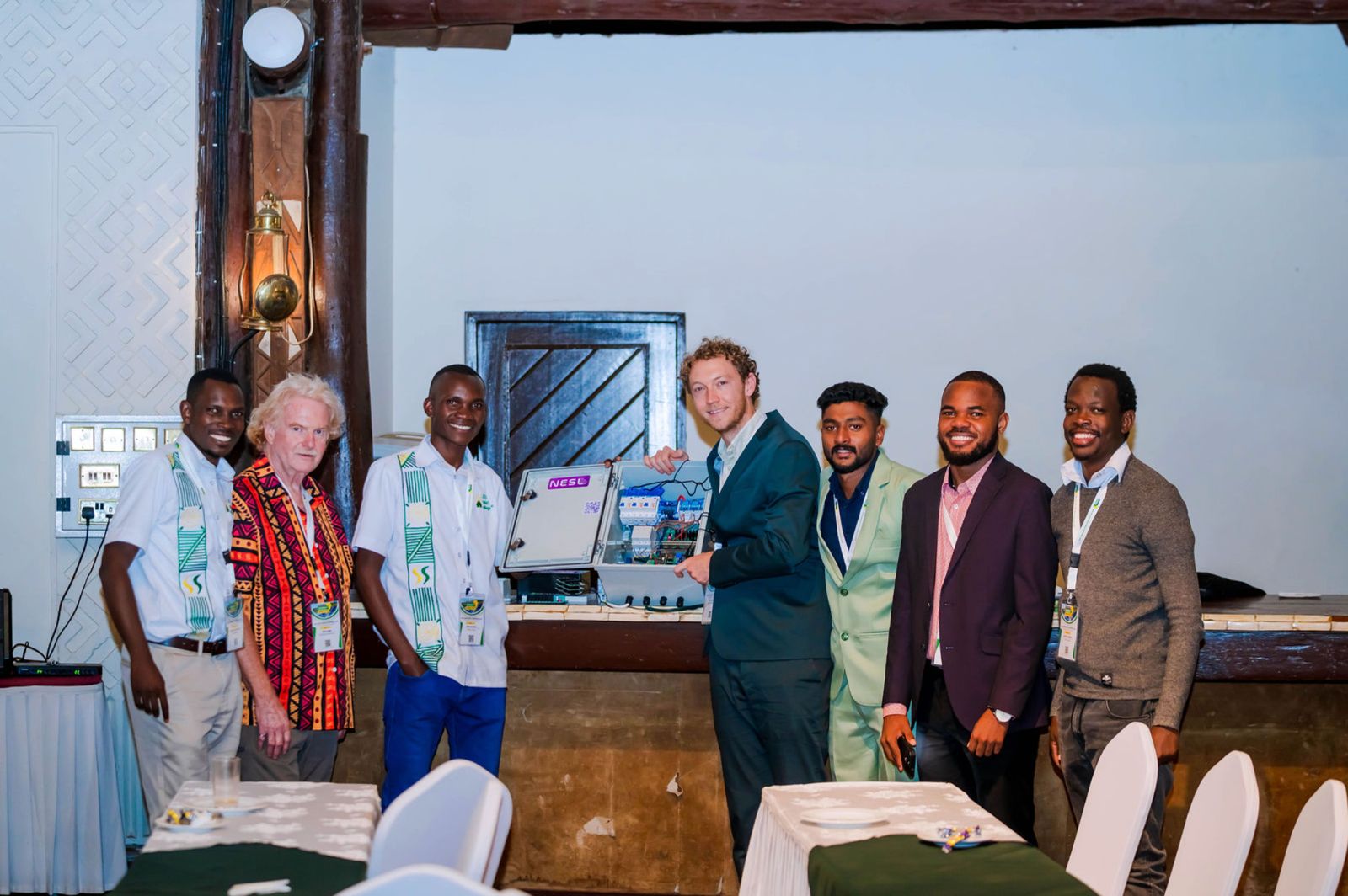
    NFE and collaborators with prototype Metering 3.0 hardware during PowerAfrica 2026.
    NFE and collaborators demonstrating prototype Metering 3.0 hardware at PowerAfrica 2026.

    Another highlight was demonstrating our Metering 3.0 hardware collaboration with the IEEE Smart Village Technology Committee. This work is part of a longer metering journey for NFE.

    We started with Generation 1: Calinmeter hardware sourced from China, paired with proprietary software. Our current pilot has moved to Generation 2: locally purchased CHINT meters integrated with open-source software and open protocols. Generation 3 goes further. The goal is open hardware, open firmware and open software, with equipment that can increasingly be assembled, maintained and repaired in-country.

    The response at the workshop was encouraging. Fifteen participants picked up prototype EMS boards to test in their own projects. For us, that was an important signal that this work can be useful beyond NFE’s own deployments. Open, locally maintainable metering infrastructure has the potential to reduce vendor dependence while building technical capability within the markets where these systems operate.

    Our next commitment is practical: NFE plans to deploy Metering 3.0 at our pilot microgrid before the end of Q4 2026. That deployment will give us a live environment in which to test the hardware, software and operating model together.

    What this means for NFE

    PowerAfrica reinforced something we have been learning through our work in Uganda: the energy challenge is increasingly about reliability, not only access. Many communities already have a grid connection but still cannot confidently depend on power being available when they need it.

    NFE’s Reliable Power Microgrids are our response to that problem. At Sezibwa Rental Homes in Nansana, we have already progressed from smart metering and energy data collection to battery-backed reliability. The next steps are solar integration, a stronger local-energy backbone, continued development of the Microgrid OS, and the transition toward Metering 3.0.

    But the biggest lesson from Nairobi was that scaling will require more than technology. It will require a pipeline of communities, experienced mentors, open technology collaborators and patient financing partners. That is why our relationship with IEEE Smart Village matters to us.

    We left PowerAfrica 2026 with clearer priorities, new relationships and practical actions already underway. We are grateful to IEEE Smart Village for the invitation, for the opportunity to contribute, and for connecting NFE to a community of entrepreneurs and technologists who are building the future of energy access and reliability across Africa.
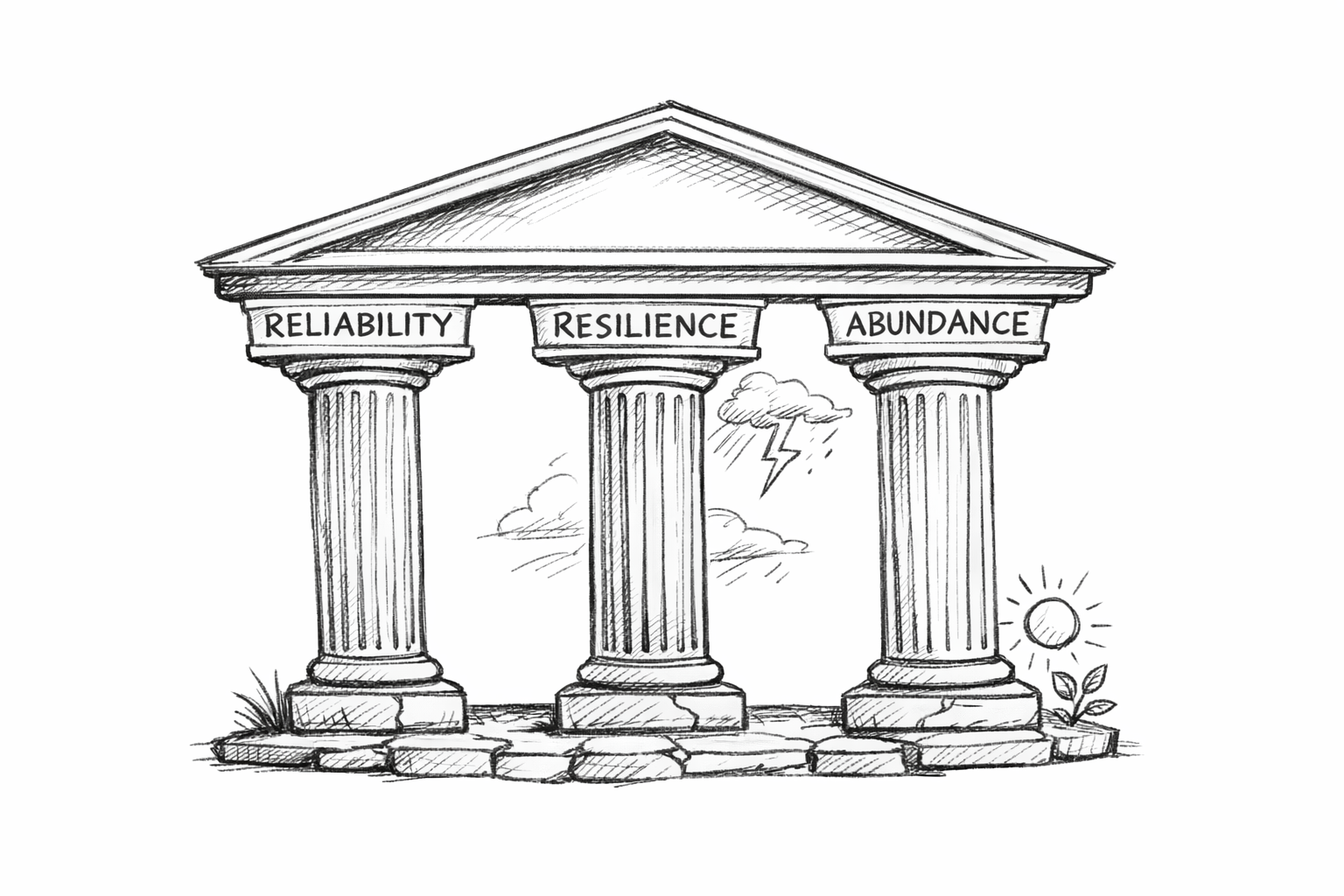
  • The Three Pillars: Energy Reliability, Resilience and Abundance

    The Three Pillars: Energy Reliability, Resilience and Abundance

    Why these three ideas sit at the center of our work at Nearly Free Energy

    When people ask what really drives our work at Nearly Free Energy, I usually come back to three words: reliability, resilience, and abundance.

    They sound technical at first, maybe even like utility jargon. But in reality, they describe very human experiences; the frustration of power going off in the middle of the day, the anxiety during a long blackout, and the quiet calculation people make every month about whether they can afford to pay their electricity bill.

    These three qualities shape how we think about energy, how we design our systems, and why we exist as a company.


    Reliability: Keeping the Lights On During Everyday Life

    Reliability is the one most of our customers immediately understand — because they live with unreliable electricity every single day.

    At its simplest, reliability is about providing uninterrupted power under normal conditions and during expected, short disruptions ; things like minor equipment failures or routine storms.

    The usual ways to measure reliability are pretty straightforward:

    • how often outages happen (frequency)
    • how long they last (average duration and time to restore)

    The goal here is simple: electricity should stay on during everyday events.

    How we work toward reliability

    Automated backups
    We collect detailed outage data from the communities we serve. When the grid goes down, backup power comes on automatically. Because we track outage frequency and duration, we can size these backups more accurately; not guessing, but responding to real patterns.

    Predictive maintenance
    We invest in high‑quality equipment; meters, inverters, solar panels, batteries and we monitor them continuously. That lets us spot performance issues early and fix them before they turn into outages. The goal is to prevent failure, not just respond to it.

    Reliability is about trust. When people flip a switch, they shouldn’t have to wonder whether power will be there.


    Resilience: When Things Go Really Wrong

    Resilience is often misunderstood, even within the energy industry.

    While reliability focuses on normal conditions, resilience is about rare but severe events: floods, major grid failures, fuel shortages, or system-wide breakdowns that cause long outages.

    Resilience asks a different question: when something big goes wrong, how quickly can we recover — and what can we keep running in the meantime?

    Key metrics here include:

    • mean time to restore power
    • the percentage of critical services kept online

    The goal isn’t perfection. It’s to minimize the damage of a catastrophe.

    How we design for resilience

    Microgrids
    We build grid-connected but islandable microgrids; smaller networks that can disconnect from the main grid and operate independently when necessary. This prevents a single failure upstream from taking everyone down with it.

    Peak‑shaving and load prioritization
    During severe outages, not every load can be supported equally. We design systems that prioritize critical needs; lighting, refrigeration, communications; instead of spreading limited power too thin.

    Resilience is about dignity during crisis. Even when systems fail, life shouldn’t come to a halt.


    Abundance: Energy You Can Actually Use

    Abundance is our favorite of the three; because it’s the one that changes behavior.

    Energy abundance means electricity is both sustainable and affordable. People shouldn’t have to choose between using power and protecting the environment. And they shouldn’t feel anxious every time they turn something on.

    Our working definition is simple:

    • energy is generated from renewable sources (like sunlight)
    • electricity costs less than 2% of a household’s monthly income

    When those two conditions are met, we consider energy truly abundant.

    Key metrics include:

    • percentage of energy from renewables
    • the ratio of monthly electricity bills to household income

    The goal is clear: expand access to clean energy without financial stress.

    How we work toward abundance

    Renewables only
    We made a deliberate and costly decision to run our microgrids on 100% renewable energy. Lithium‑ion batteries are expensive upfront, but they allow solar to serve not just as backup power, but eventually as the primary source for entire communities.

    Usage transparency
    We use smart meters that give customers real‑time insight into how their homes consume electricity. When people can see usage as it happens, they can adjust behavior immediately keeping bills affordable without guesswork.

    With abundance comes freedom: freedom to cook, study, work, and live without constantly counting units.


    The Three Pillars, Together

    Reliability, resilience, and abundance aren’t independent ideas. They reinforce each other. They are at the heart of the energy access movement.

    When energy is reliable, people trust it.
    When it’s resilient, communities survive disruption.
    When it’s abundant, energy becomes an enabler rather than a constraint.

    At that point, electricity stops being just a commodity to manage.

    It becomes a tool for community transformation.

    That’s the future we’re building at Nearly Free Energy. Learn more here